INDOOR LED SCREENS

Indoor LED Display screen supplier in Dubai, UAE

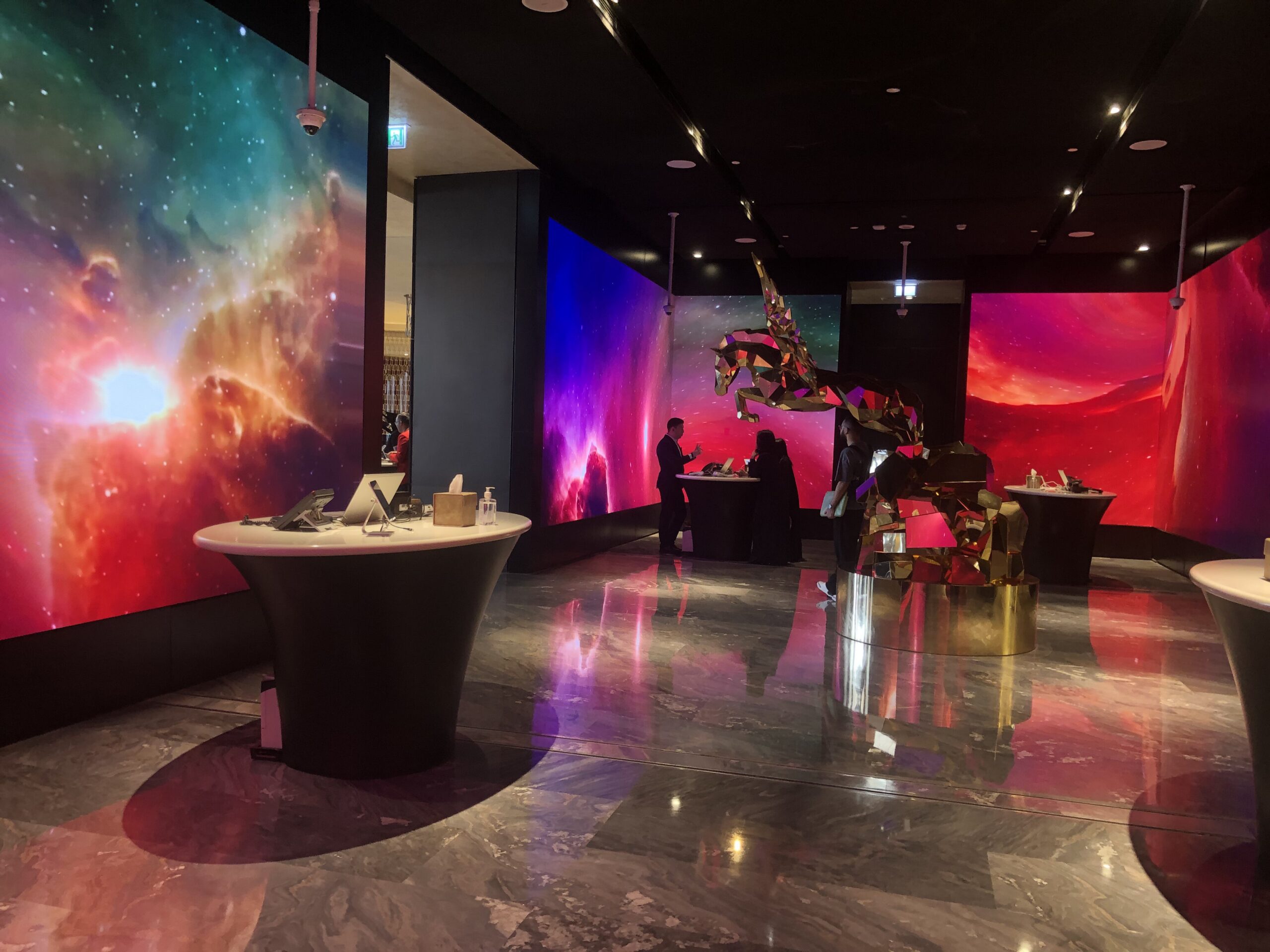
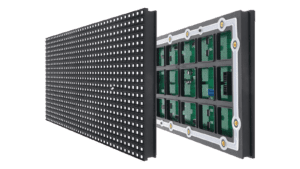
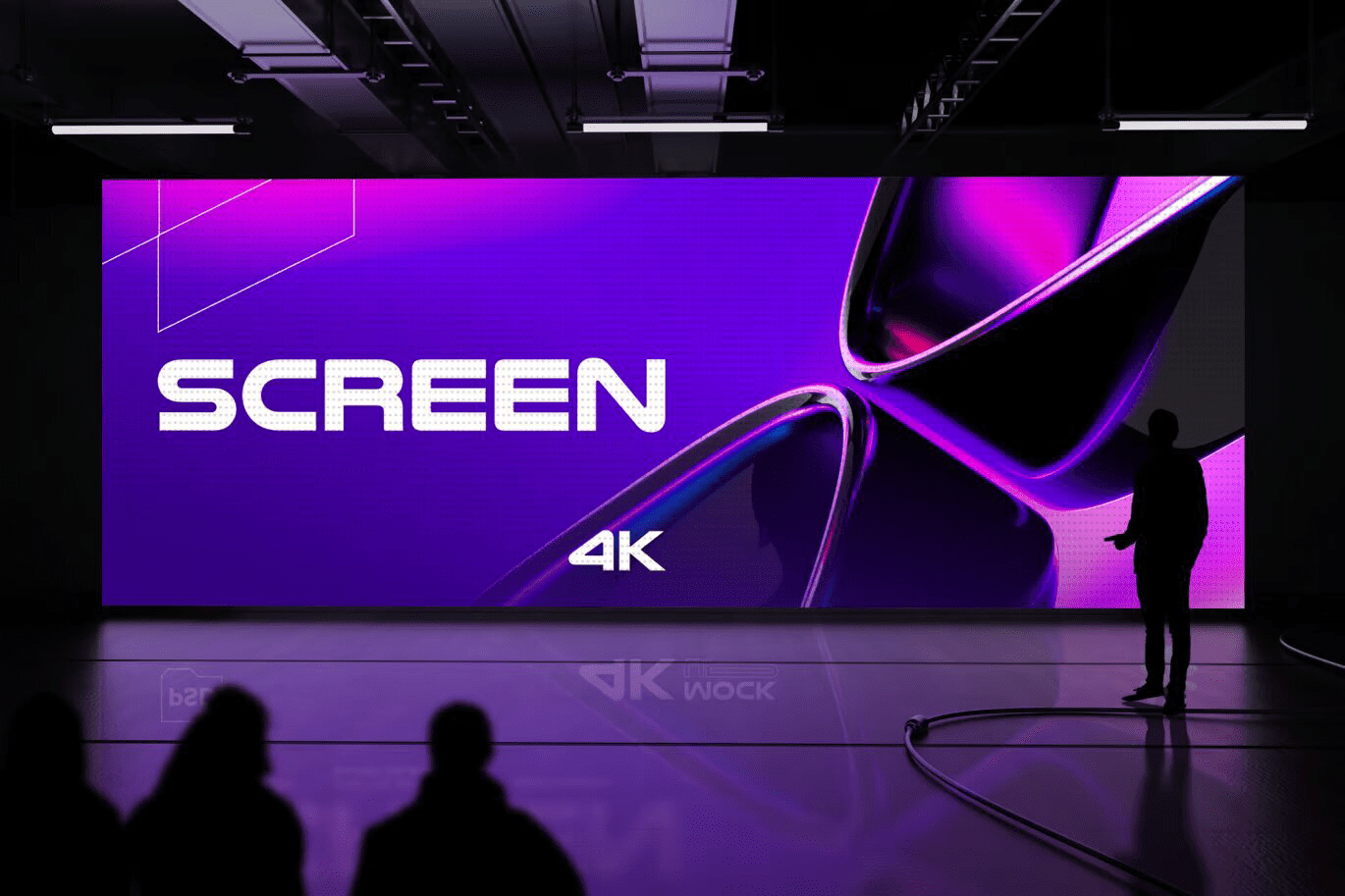
An indoor LED screen is a modular display. Many small LED modules join together to form one large, seamless surface. In contrast, outdoor screens face the weather. An indoor screen is made for controlled spaces where viewers often stand close.

We offer pixel pitches from P0.9 to P5 in SMD, GOB, and COB technology. As a result, you can match the screen to your viewing distance and budget. You also avoid paying for detail that nobody can see. We build every screen to your exact size and shape. There are no bezels or visible seams. In addition, you get wide 160° viewing angles, refresh rates up to 3,840 Hz and a lifespan of 100,000+ hours.

We also handle the whole project. First, our team surveys your site and designs the layout. Then we supply, install and set up your content. Finally, our UAE-based team supports you after the sale. Your quotation lists the modules, controller, structure, and installation, so you can compare suppliers easily.

Tell us your wall size and viewing distance. We will recommend the right pixel pitch and technology for your space.

Overview

What Is an Indoor LED Screen?

An indoor LED screen is a modular display. Many small LED modules join together to form one large, seamless surface. In contrast, outdoor screens face the weather. An indoor screen is made for controlled spaces where viewers often stand close.

This technology gives you fine detail, wide viewing angles and smooth colour. Brightness is also adjustable, so the picture stays comfortable in any room. In addition, you can show videos, adverts, presentations, live camera feeds, social media and product information.

Features

High-Quality LED

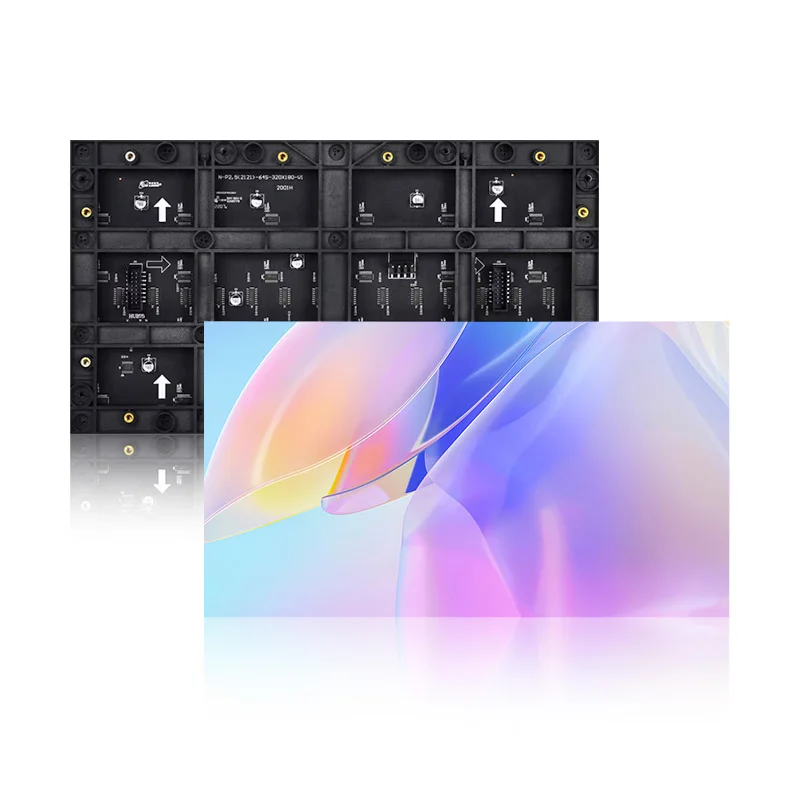
We use premium SMD and COB LEDs. As a result, colour stays consistent and the screen lasts longer.

Full Black Technology

Black LEDs and a black module surface cut reflections. Therefore, blacks look deep even under bright lobby lights and near glass.

High Refresh Rate

Refresh rates run from 1,920 Hz to 7,680 Hz. This keeps the picture flicker-free to the eye. Moreover, phone and broadcast cameras show no scan lines or moiré.

Multiple Pixels

Pitches range from 0.9 mm to 5 mm. Viewers can therefore stand close without seeing single pixels.

LED module brightness

Brightness runs from 600 to 1,500 nits. Automatic adjustment keeps it comfortable day and night. For example, malls use a bright setting, while boardrooms use a softer one.

Wide Viewing

Viewing angles reach 160° to 170°. Colour and contrast stay consistent, even from the side of the room.

LED Modules of Indoor LED Screen

How to Choose the Right Pixel Pitch for Your Indoor LED Screen

OurPixel pitch is the most significant specification choice for an indoor LED screen project. Choosing a pitch too wide for your viewing distance results in a visible pixel grid and poor image quality. Choosing an overly fine pitch for a long-distance application incurs needless costs.

P0.9 – P1.2

1.0 – 1.5 METRES

Ultra-close precision

Security control rooms, broadcast studios, and executive boardrooms.

P3.0 – P4.0

4 – 8 METRES

Mid-range commercial

Hotel atriums, shopping mall concourses, event halls.

P1.5 – P1.8

1.5 – 2.5 METRES

Premium close-up viewing

Corporate boardrooms, command centres, luxury retail counters.

P5.0 – P6.0

8 – 12 METRES

Large-format indoor

Auditoriums, large event venues, warehouse retails.

P2.0 – P2.5

2.5 – 5 METRES

Retail & corporate standard

Lobbies, retail showrooms, reception areas, conference rooms.

Types Of Indoor LED Module

GOB LED MODULES

  • With Glue on the surface
  • Wide viewing angle. 170-degree visibility
  • 1R1G1B full-color LED screen panel
  • Highly stable driver ICs for better color uniformity and vibrant images
  • Designed with the latest GOB encapsulation, offering an excellent full-color present.
  • High contrast ratio of 5000:1 to deliver vibrant colors.
  • High refresh rate with over 1920hz to 3840Hz to allow flicker-free
See More

COB LED MODULES

  • COB LED displays, using Chip-on-Board technology, represent a quantum leap in LED display technology, in which several LED chips are directly mounted on the substrate, forming an uninterrupted, compact, and efficient light source.
  • With reduced pixel pitches, COB LED displays provide unmatched definition and high energy efficiency.
  • They also have better heat dissipation, increased durability, and wide viewing angles.
See More

SMD LED MODULES

  • Best for indoor, 160-degree visibility
  • 1R1G1B full-color LED screen panel
  • Low brightness of more than 600-1000 Nits for indoor mounting.
  • Stable driver ICs to provide improved color uniformity and richer images
  • Made with the new SMD encapsulation, providing first-rate full-color present.
  • A wide contrast ratio of 5000:1 to provide rich colors.
  • High refresh rate with more than 1920hz to 3840Hz to permit flicker-free
See More

Benefits of an Indoor LED Display Screen

Sharp, Colourful Visuals

A smaller pixel pitch means pixels sit closer together. Therefore, the image looks sharper from a short distance. Full-colour output and 14–16 bit greyscale keep gradients smooth.

Seamless, Any-Size Design

There are no bezels, so you can build almost any size or shape. Flat, curved, corner and floor layouts are therefore all possible. In addition, you can add modules later to expand the wall.

Efficient Power Use

In fact, most indoor rooms need only 40–60% of the maximum brightness. As a result, the screen draws less power in daily use. Also, automatic brightness control adjusts the level for you.

Long Service Life

Indoor modules typically last 100,000+ hours to 50% brightness. That equals about 8–12 years of daily business use. Moreover, front and rear service options make repairs quick.

Real-Time Content Updates

You can change content from anywhere. Use WiFi, LAN, 4G, USB or the cloud. For example, a store can switch promotions in seconds.

Easy Maintenance

Front-service cabinets let technicians swap modules from the front. Meanwhile, rear-service cabinets suit walls with rear access. As a result, repairs take minutes, not days.

WHERE CAN YOU USE AN INDOOR LED SCREEN DISPLAY?

Our premium Indoor LED screens uses are included 

led screen for events

You must use our excellent LED screen whether you’re planning a conference, trade expo, concert, or any other kind of event. Your information is shown on our high-resolution screens with remarkably realistic brightness and clarity. Get in touch with us right now to find out how our graphic solutions can make your event seem amazing.

Indoor LED screen for retailers

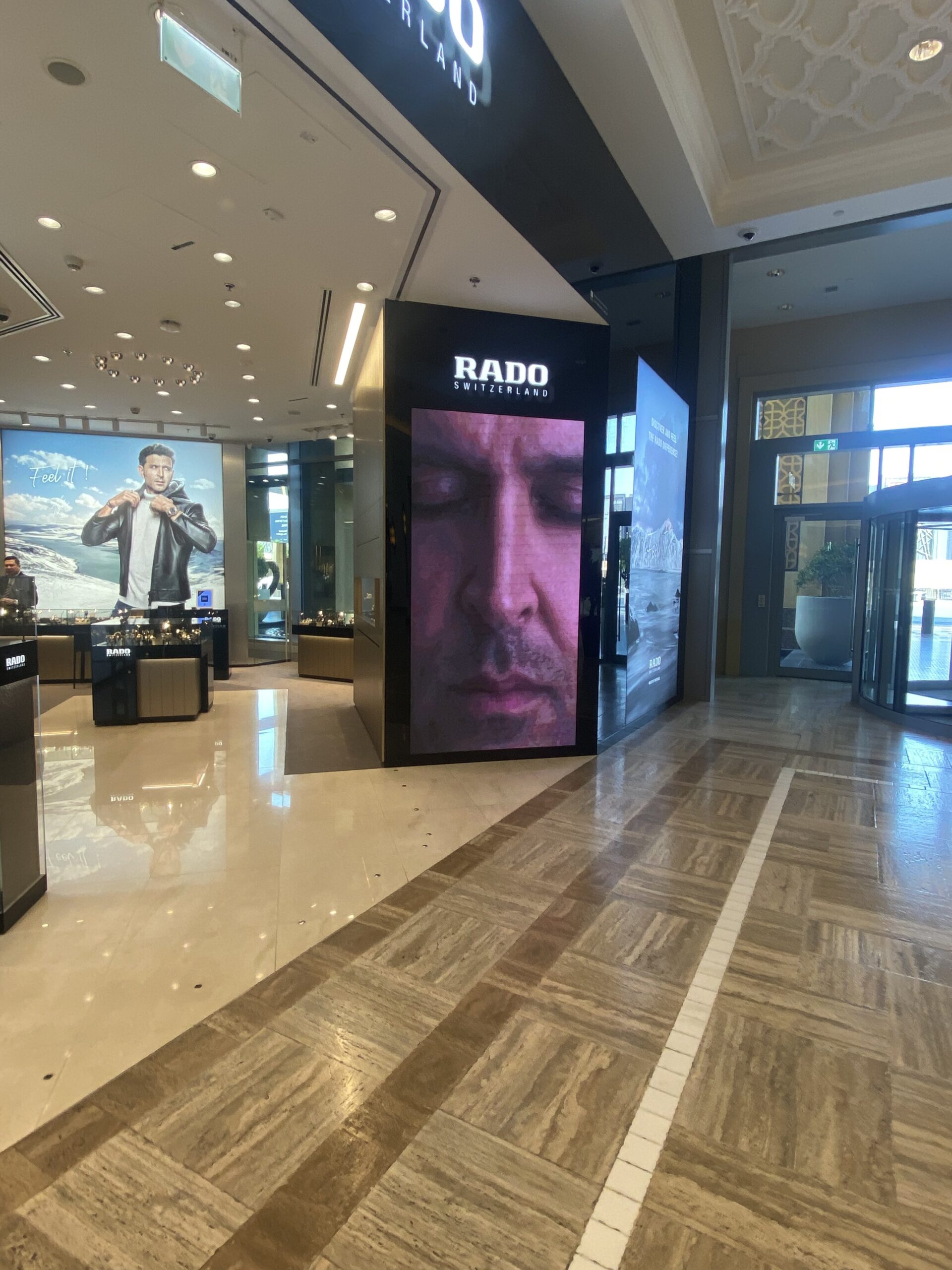
When it comes to retail, our indoor screens provide a dynamic method to display your items, promotions, and brand messaging. Whether you want to display product videos, digital signs, or interactive information, our LED displays offer a varied platform for engaging with your clients and creating a memorable impression.

Rado retail shop LED screen installed by best indoor LED screen supplier in UAE

led screen for advertising

 In today’s competitive market, grabbing the attention of your target audience is more challenging than ever. Our indoor LED screens offer a powerful advertising solution to effectively communicate your brand message and promotions in high-traffic indoor locations. Whether it’s in shopping malls, airports, or retail stores, our LED screens provide a dynamic platform to showcase your advertisements.

Let’s Build Your Perfect Indoor LED Screens Solution

you wish to advertise, make your brand known, or talk to your audience, partner with Volkanoo, the top indoor LED screen supplier in Dubai. Our specialists will guide you to find the perfect indoor LED solution specific to your location, goals, and vision requirements.

FAQ

What is an Indoor LED Screen?

An indoor LED display is an indoor digital display panel that uses light-emitting diodes (LEDs) to display pictures and videos with rich colours, high contrast, and wide viewing angles.

An indoor LED screen is a screen for indoor use. It utilizes next-generation LED technology to provide stutter-free, dynamic displays that draw attention.

Compared to outdoor LED screens, which are made to withstand weather conditions like rain and sunlight, indoor LED screens are made to highlight resolution and clarity.

What are the main components of indoor led screen?

The major parts of an indoor LED screen work together to provide good quality visual performance. They consist of:

  1. Indoor LED Modules: These modules utilize different technologies, including:
  • SMD (Surface-Mount Device) is, most common in the LED market.
  • GOB (Glue-on-Board) for added durability and resistance to environmental conditions.
  • COB (Chip-on-Board) for added pixel density and greater reliability.
  1. Cabinet (optional): The frame providing support for the LED modules, receiver card, power supplies, and cables provides stability and support.
  2. Power Supply: Provides power distribution to the LED modules.
  3. Receiver Card: Acts as the interface to drive the LED modules, process video signals.
  4. Power Cables: Connect the power supply to the LED modules.
  5. Network Cables: Connect the LED modules to the control system.
  6. LED Sender: Converts received signals to visible content to be rendered on the screen.
What is the brightness of indoor LED display?

Typically, indoor LED screens are 600 to 1000 cd/m² luminous. However, for applications that require extra visibility or high-bright display, some specialized models that are up to 2000 cd/m² are available.

What is the size of indoor LED display?

An indoor LED screen may be very large or very small, even as small as a single module.

Usually, indoor LED screens are specified either by modules or by cabinets.

Specifying by the number of LED modules, screens are composed of a single module or hundreds of modules. Typical module sizes are:

320×160mm* 160×160mm

256×128mm

192×192mm

250×250mm

Or by cabinet, indoor LED screen size is calculated by the number of cabinets interconnected, to build a big screen composed of multiple cabinet units.

Typical cabinet sizes are:

960×960mm

640×480mm

640×360mm

640×640mm

576×576mm

480×480mm

512×512mm

960×640mm

1000×500mm

500×500mm

How to install indoor LED display?

The Indoor LED screen offers various installation options such as standing installation, suspension, or hanging.

  1. Hanging Installation: Commonly used in indoor and semi-outdoor settings like corridors and transportation hubs.
  2. Embedded Installation: The display is embedded into the wall, creating a seamless look, suitable for small-pitch displays.
  3. Column Installation: Suitable for LED billboards, using single or double columns depending on the screen size.
  4. Wall-mounted Installation: Ideal for indoor or semi-outdoor displays with limited space.
  5. Rental Hanging Installation: Suitable for rental displays, allowing for easy setup and disassembly.
  6. Ground Installation: Common in exhibitions and shopping malls, using stands to install the display on the ground.
What is the maintenance ways for indoor LED display?

It generally has two major access methods: rear service and front service.

1. Front Service

Front service maintenance allows you to access and serve LED modules from the front of the screen.
It is mainly used for wall mounting installation.

2. Rear Service

Rear service requires access from the back of the screen and is typically used where there is ample space behind the indoor LED screen.

How to control indoor LED screen?

An indoor LED screen can be controlled in several ways to meet different demands and applications.

Synchronous control

Plug a computer into the controller using HDMI or DVI, and then plug the controller into the LED display using a network cable, and get real-time display updates.

Asynchronous Control

Connect your phone or iPad to the controller using Wi-Fi or 4G/5G, and then the controller will operate the LED screen using a network cable

Cluster Control

Supports Internet remote control, where a computer or phone logs into a cloud platform that is linked with the controller via 4G/5G/LAN/Wi-Fi, and then controls the LED display through a network cable.

What is the price of indoor LED screen?

Several factors affect the price of indoor LED screens:

  • Pixel Pitch: More accurate pitches (P1.2, P1.5, P2, P3) cost more due to higher LED density.
  • Cabinet: Different types and materials (steel and aluminium, for example) of LED screen cabinets cost differently.
  • Screen Size: A larger display area requires more modules, cabinets, cables, and control cards, so the price will be higher.
  • Additional Costs: Control systems, installation fees, and service contracts.

Get in touch

Talk To Us

Please do not hesitate to contact us with any questions. Our sales and IT teams will gladly guide you in the appropriate route.

Top